Ravine Retreat: Elevating Austin Outdoor Living
Conquering Challenging Terrain with Thermory Kodiak Spruce and Benchmark Pine
Some of the most interesting outdoor spaces come from sites that aren’t easy to build on. This home is a perfect example. Perched above a ravine in Austin, it turns a steep hillside into an opportunity for outdoor living at nearly every level.
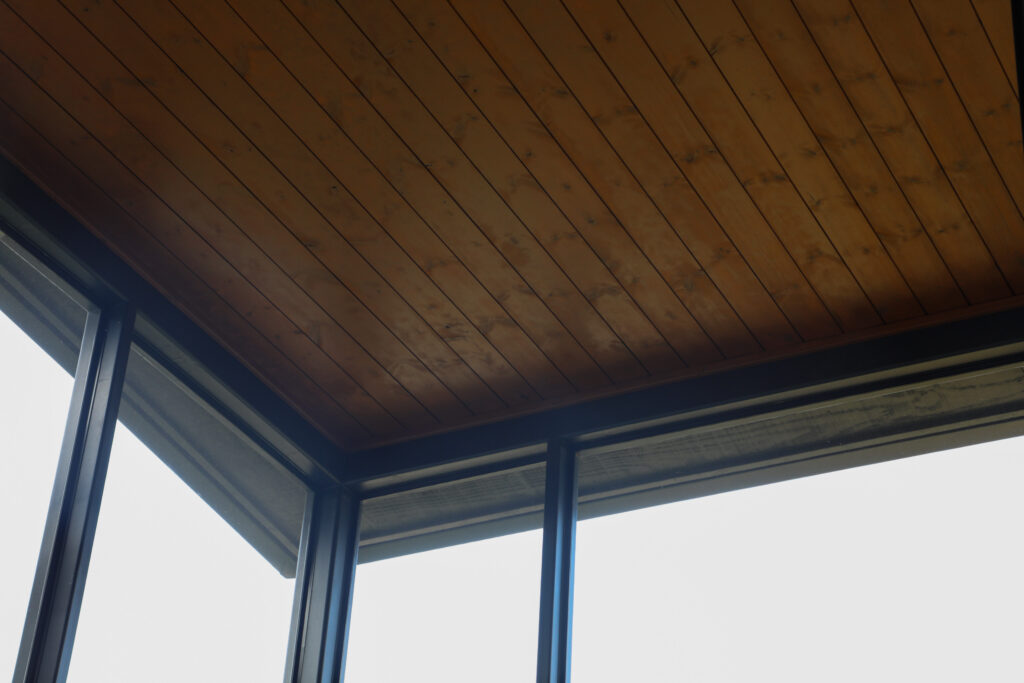
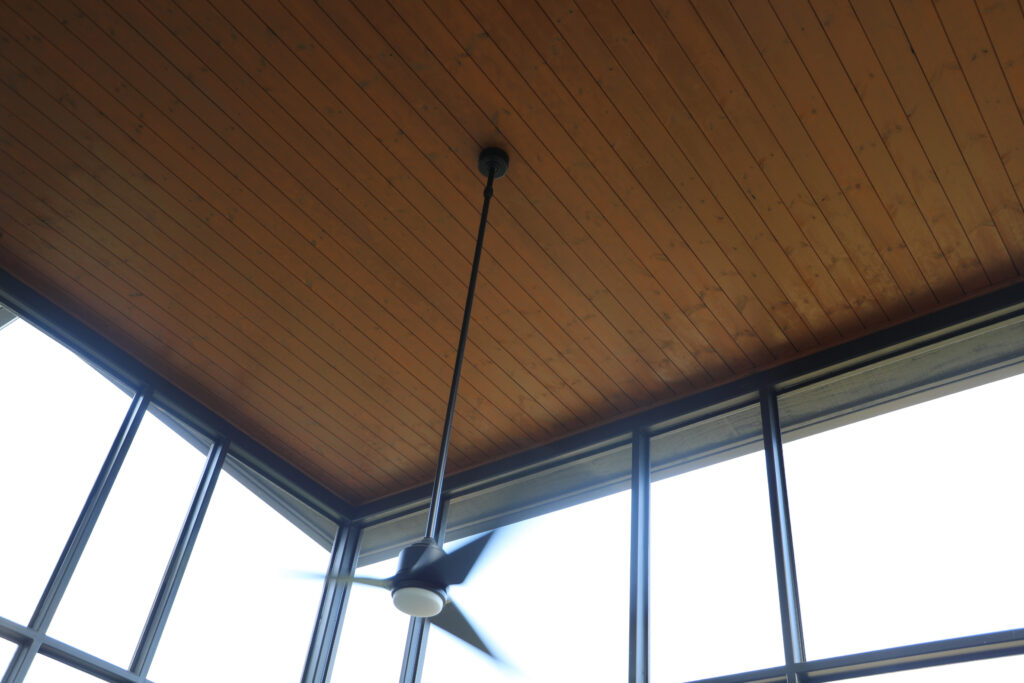
Built by Lowe Jones and the team at Midnight Oil Construction, the project features Thermory Kodiak Spruce decking and Thermory Benchmark Pine soffits. These thermally modified wood products bring natural character and lasting performance to a home where outdoor living is a major part of the design.
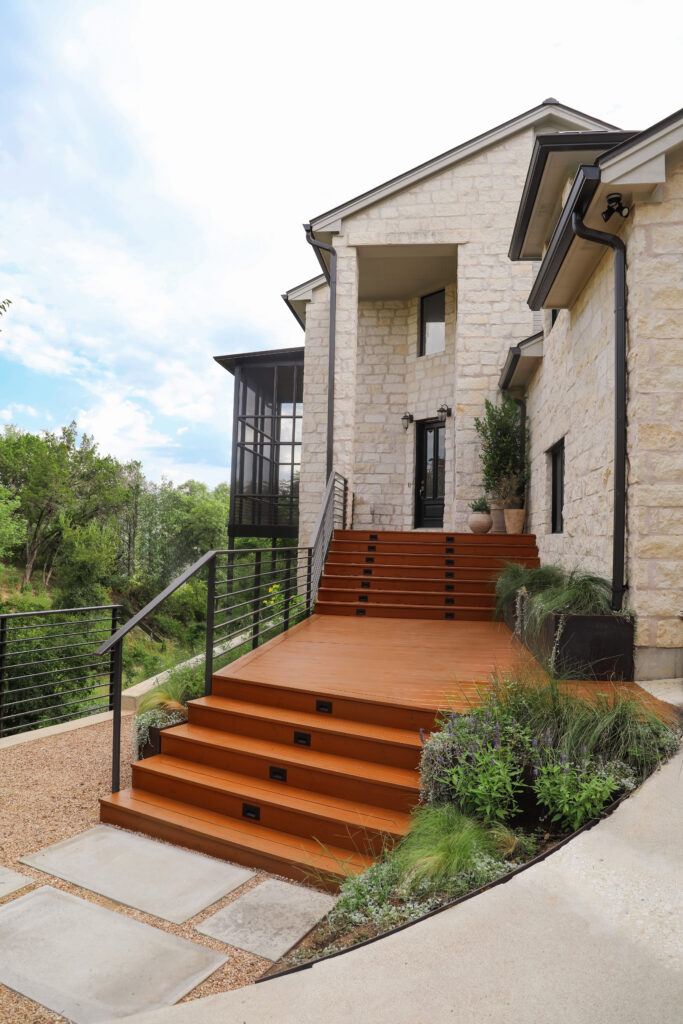
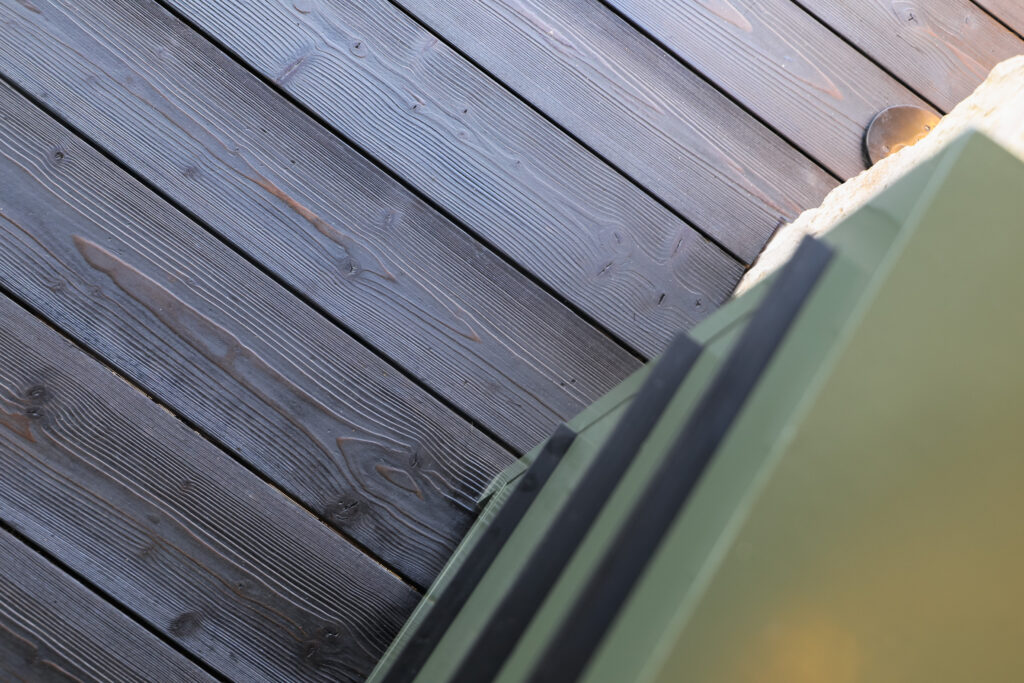
Thermory greets you at the front steps, where brown-stained decking creates a warm welcome along the entry walkway. The material continues across the home’s multiple balconies, connecting the different living levels through a consistent use of real wood.
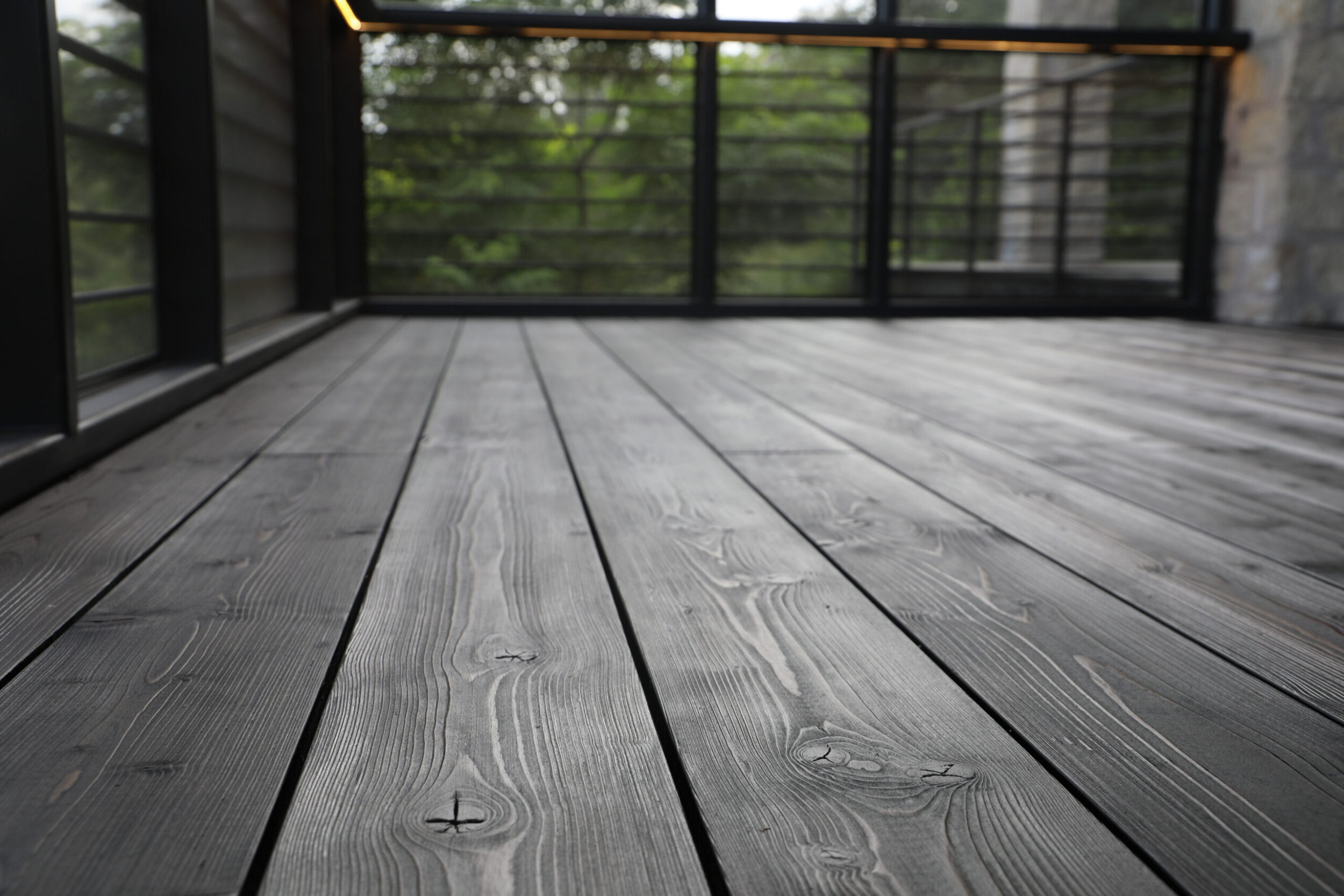
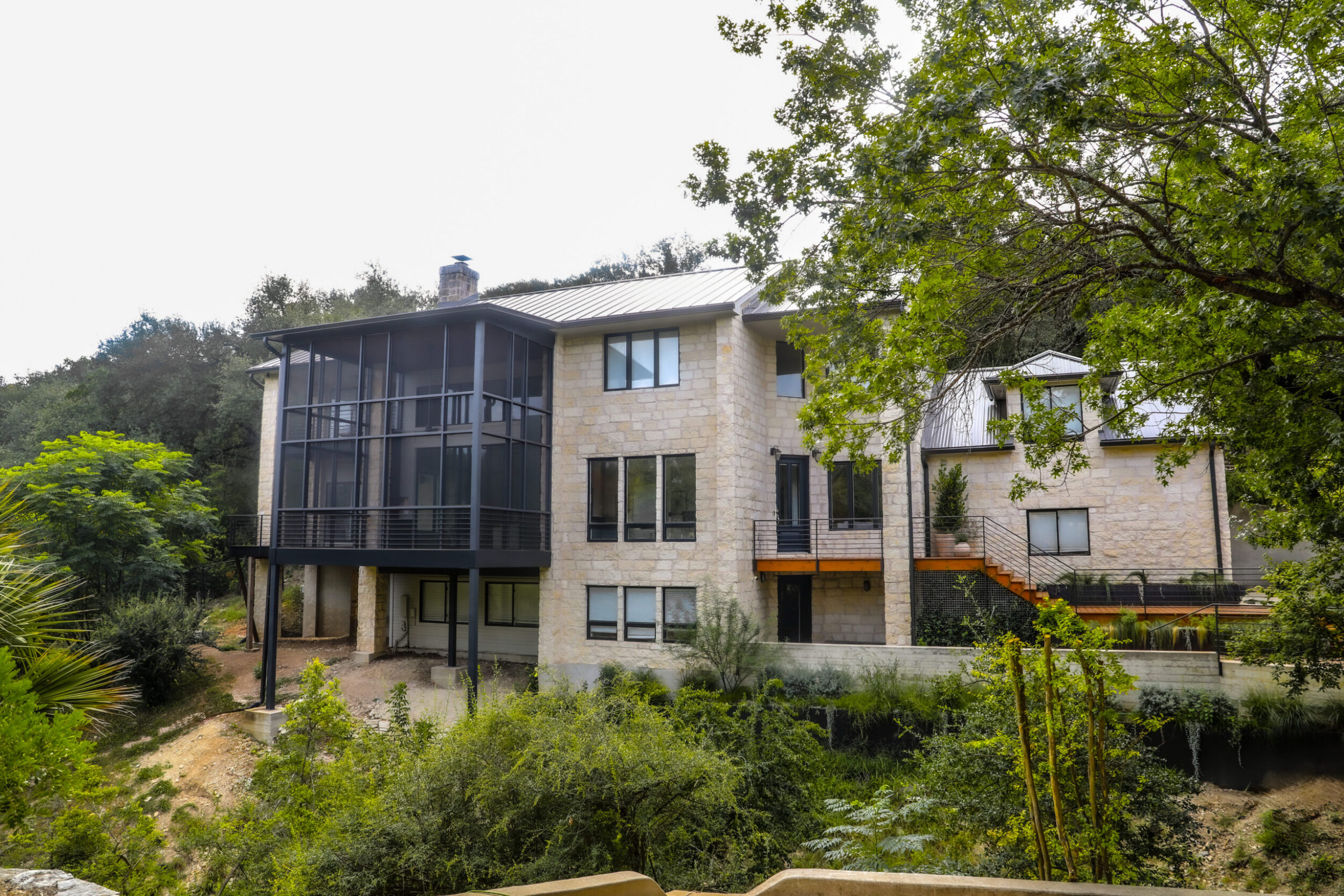
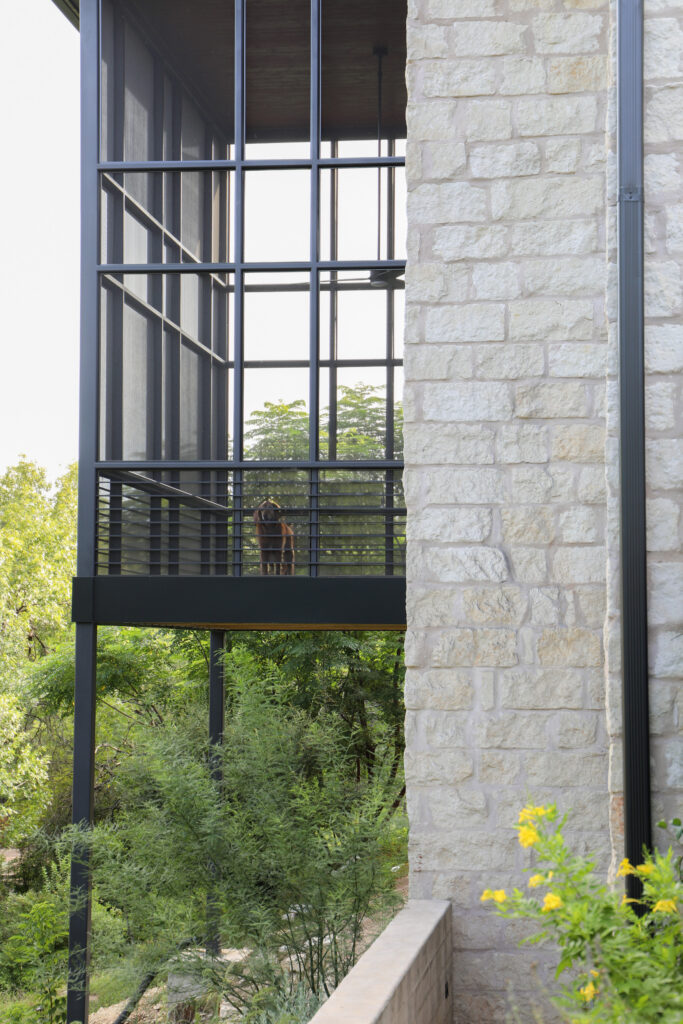
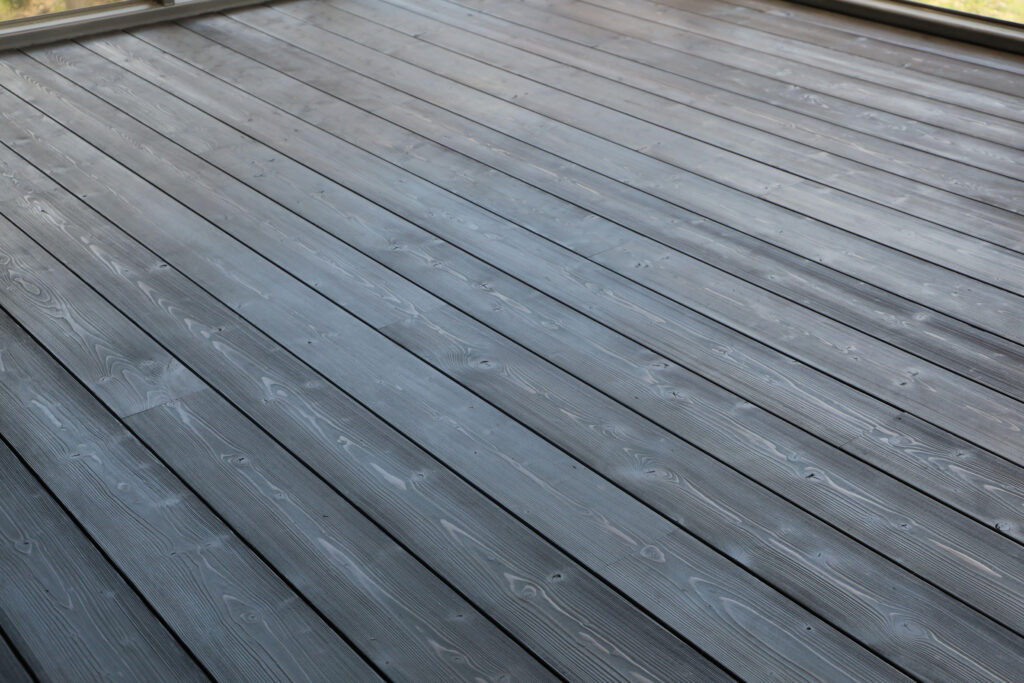
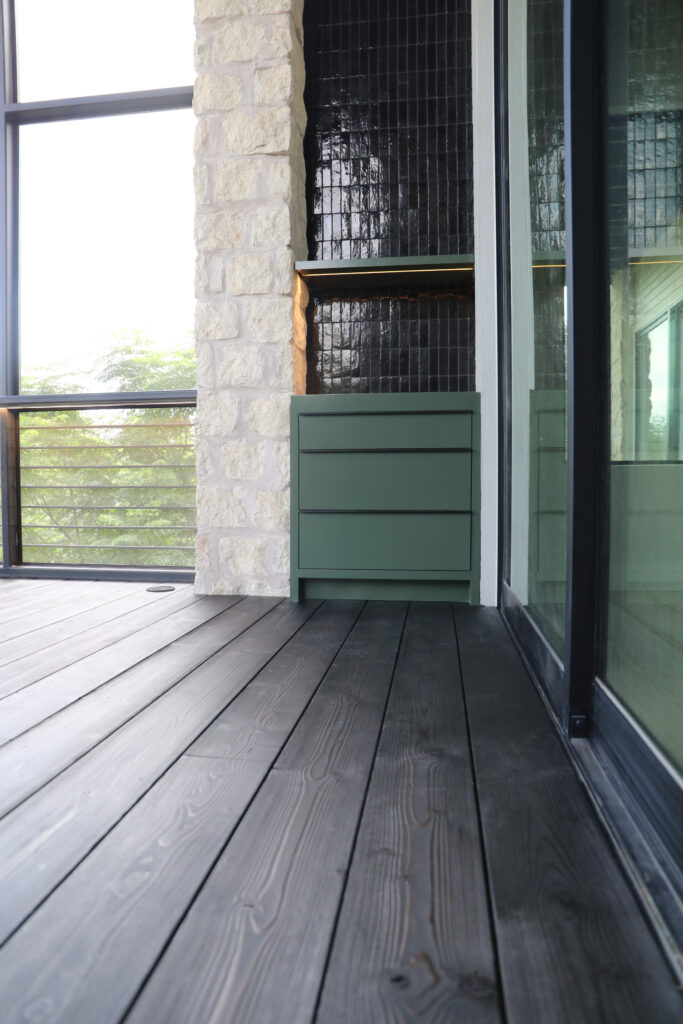
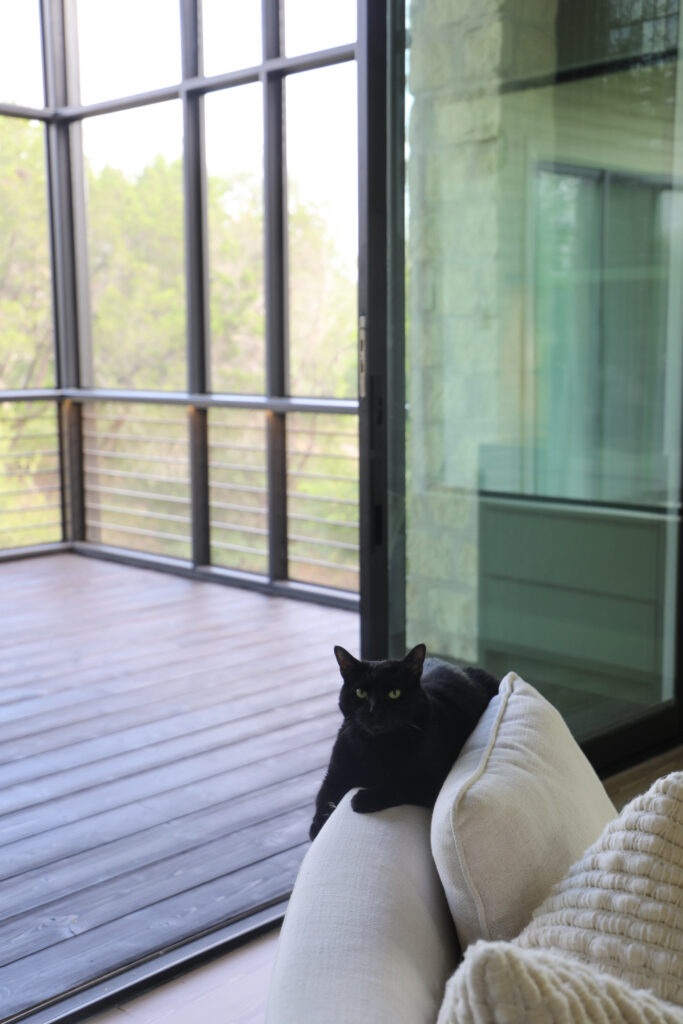
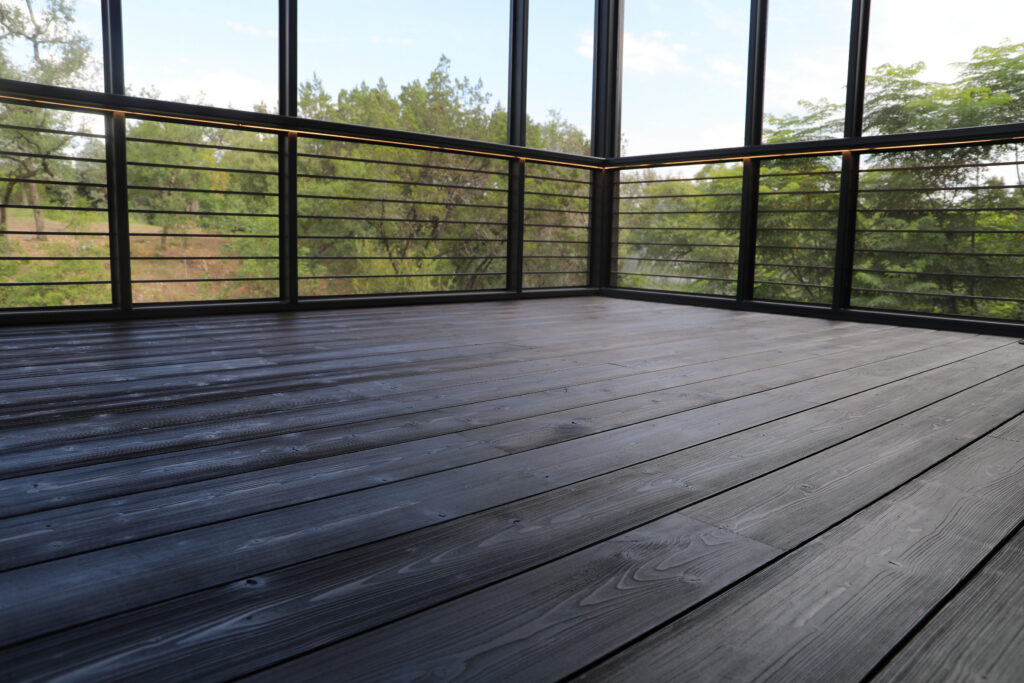
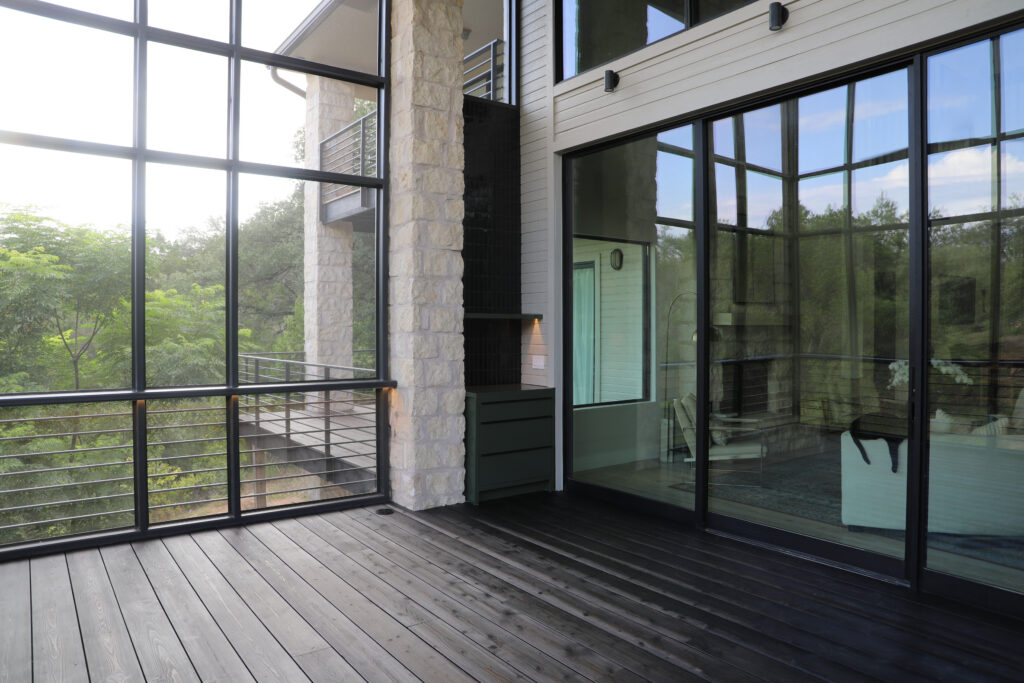
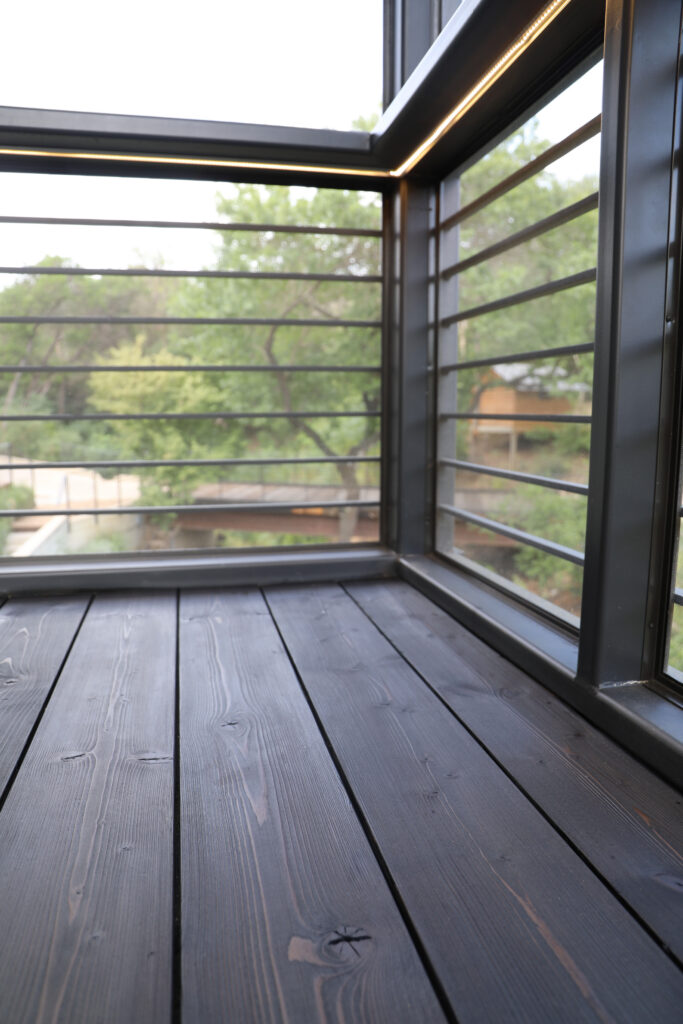
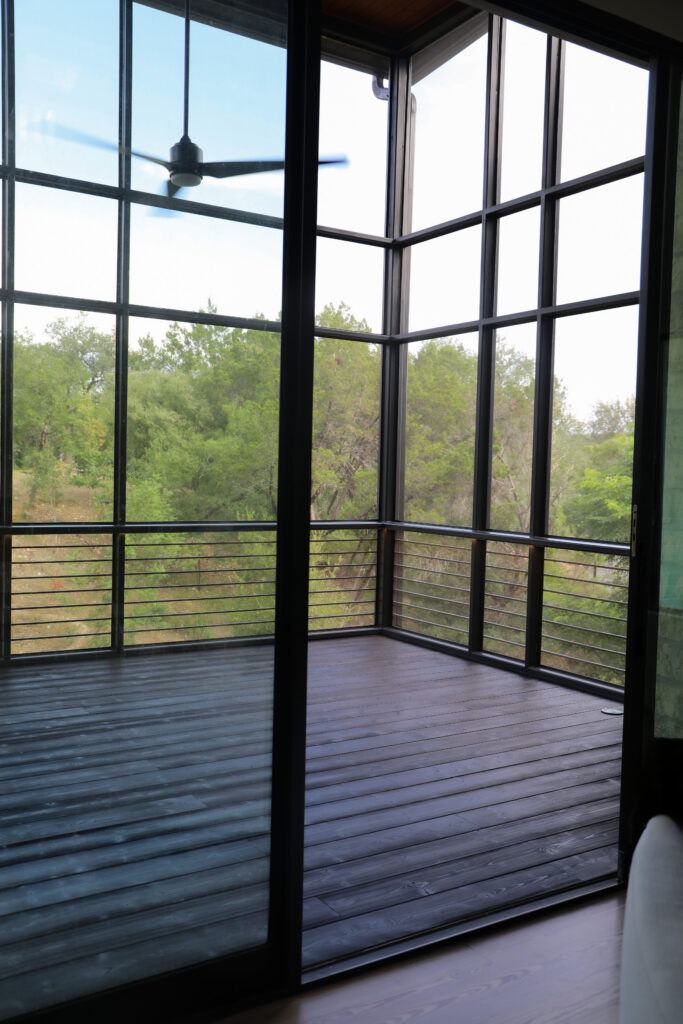
The real architectural standout is the screened-in porch extending from the front of the home. Suspended high above the ravine, this space takes Thermory in a completely different direction. Black-stained Kodiak Spruce creates a bold foundation beneath the natural warmth of Benchmark Pine soffits. The contrast gives the soaring structure a distinctive character while keeping the surrounding landscape in focus.
But creating this elevated retreat came with challenges that went far beyond material selection.
As Lowe of MOC explains:
“The most challenging parts of the build were the site topography and elevation. The house sits above a ravine in the Edwards Aquifer Recharge Zone, a sensitive area with restrictive development regulations. The steeply sloping property also ruled out use of a commercial crane."
Those conditions made construction anything but straightforward. The screened-in porch’s finished floor sits roughly 20 feet above the ravine, with the roof rising another 20 feet overhead. Building a structure of that scale on such difficult terrain required careful planning and creative problem-solving. The result is an outdoor space that takes full advantage of the elevation rather than treating it as a limitation.
And while the construction is impressive, the performance of the materials is just as important.
Thermory’s thermal modification process uses heat and steam to improve the wood’s dimensional stability and resistance to decay. Unlike a surface treatment, these performance benefits extend throughout the wood itself. Reduced moisture absorption means less swelling and shrinking as conditions change. For exposed decking and exterior soffits, that added stability is a major advantage in Austin’s changing weather.
Thermory also offers something that goes beyond performance: design versatility. The same family of thermally modified wood can take on entirely different personalities depending on the application and finish. The warm brown entry decking and dramatic black screened-in porch demonstrate just how much range these materials can offer without losing the natural character of real wood.
This home is proof that challenging terrain doesn’t have to limit great design. Midnight Oil Construction turned a complicated hillside into a series of outdoor spaces that embrace the landscape at every level. With Thermory carrying through the decking and overhead details, the finished project brings together construction ingenuity and material performance in a way that’s anything but ordinary.