
Cumaru is More Than Ipe's Alternative
A Closer Look at Cumaru for Decking, Cladding & Exterior Applications
Ipe tends to get most of the attention in the exterior hardwood world. We get it. It has earned its reputation. But it isn’t the only hardwood worth talking about.
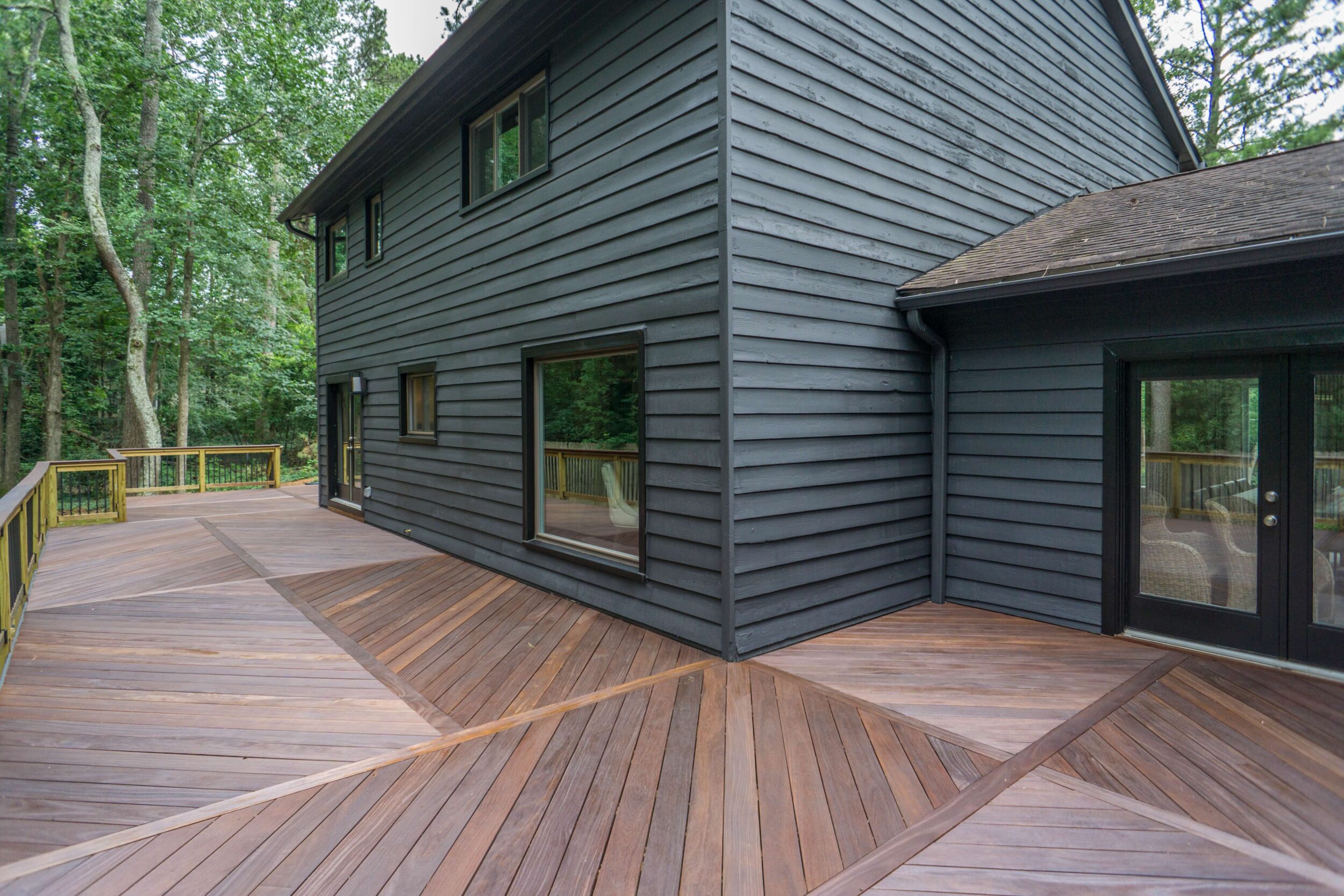
Cumaru is one of those materials that gets more interesting the deeper you get into a project. It is incredibly dense, naturally durable, full of color variation, and often comes in at a more approachable price than Ipe.
Decking is where many people first encounter Cumaru, but it doesn’t have to stop underfoot.
At TimberTown, we supply Cumaru throughout Austin, Atlanta, Nashville, and the surrounding Southeast. And lately, there is another reason we’re talking about it more in Central Texas: fire performance.
First Things First: What Is Cumaru?
Cumaru (Dipteryx spp.(opens in new tab)) is a tropical hardwood harvested in Northern South America. You may also see it called Brazilian Teak, although it isn’t actually teak.
What it is, however, is seriously dense wood.
Cumaru has a Janka hardness of 3,300 pounds-force and a specific gravity of 1.07. In plain English? This is not a soft piece of lumber.
Its density and natural durability are part of what make Cumaru so versatile outside. The wood is resistant to termites and capable of handling demanding applications where softer materials may show wear more quickly.
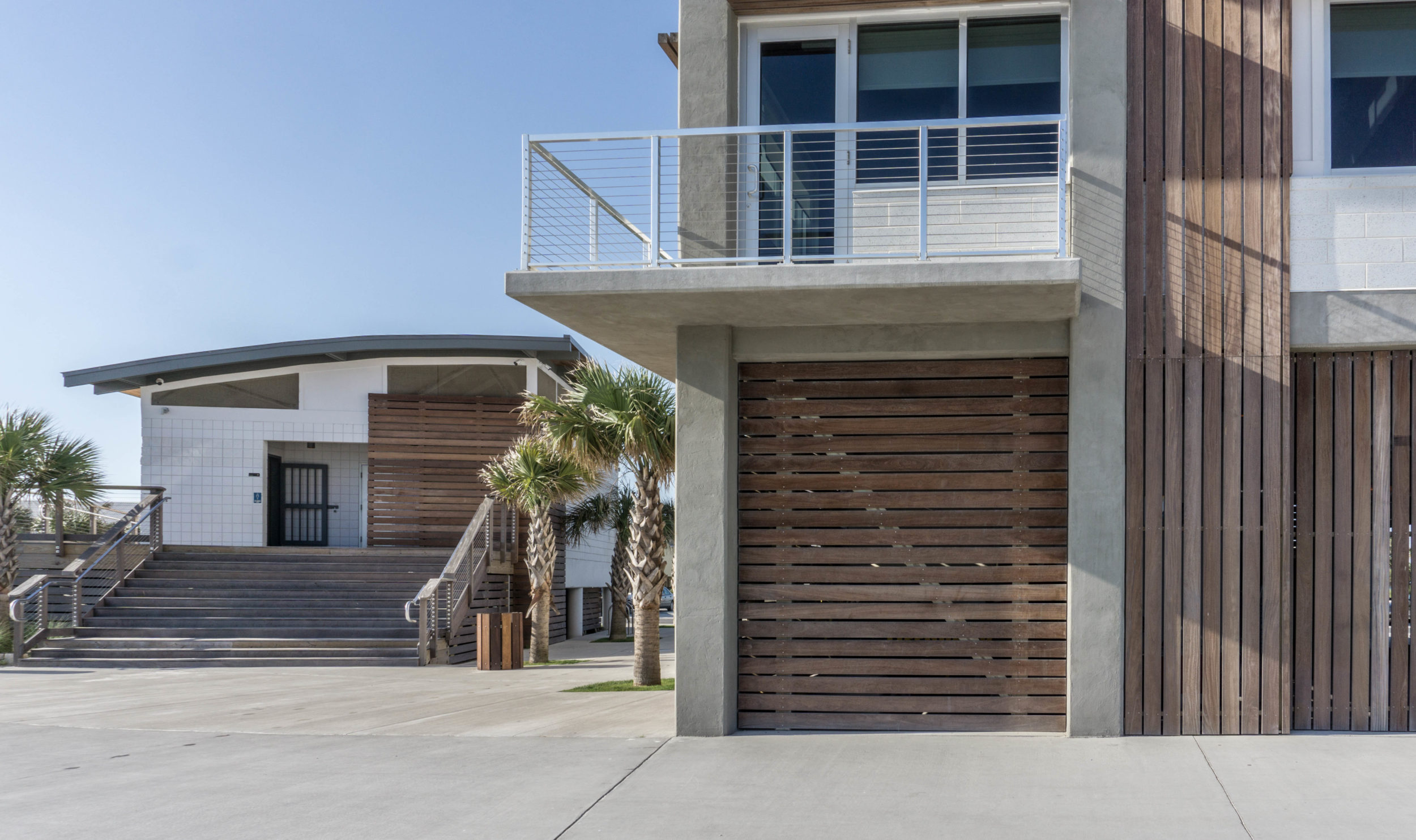
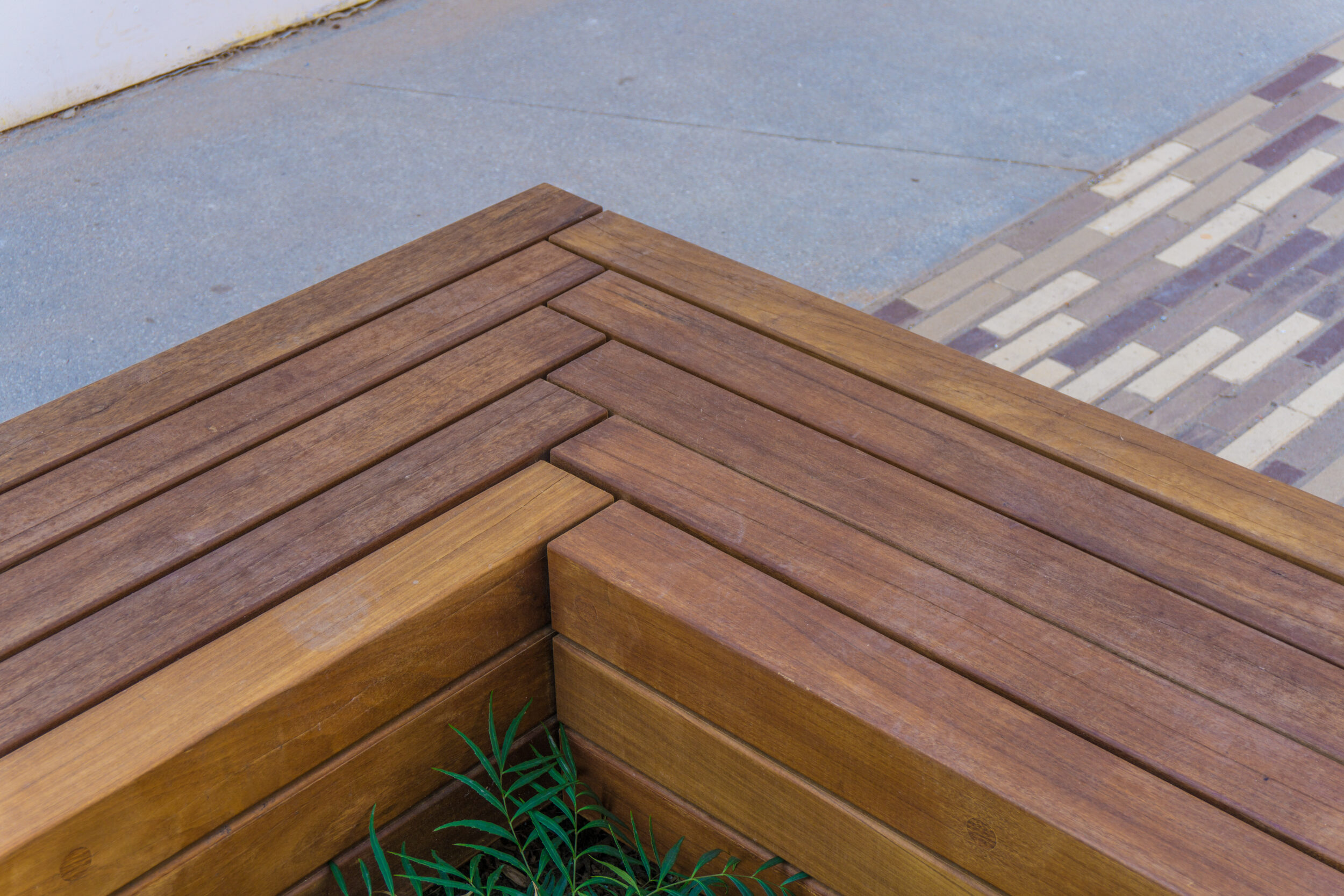
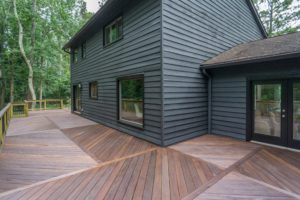
That opens the door to more than decking. Cumaru can be used for cladding, porch flooring, stairs, accent features, fencing, gazebos, and other interior or exterior applications. It gives architects and builders another way to carry the look and performance of real hardwood beyond the deck itself.
Want to go full wood nerd? Explore the Cumaru Technical Data Sheet(opens in new tab) for its physical and mechanical properties, shrinkage data, working characteristics, and more.
Cumaru vs. Ipe: What Are the Differences?
If you’re shopping for Cumaru decking, somebody is eventually going to mention Ipe(opens in new tab).
So rather than pretending the comparison doesn’t exist, let’s make it useful.
What’s the biggest difference between Cumaru and Ipe?
Cumaru vs. Ipe
Two serious hardwoods. Here’s where the differences actually show up.
| Compare | Cumaru | Ipe |
|---|---|---|
| Janka Hardness | 3,300 lbf | ~3,510 lbf |
| Appearance | Golden and reddish-brown tones with deeper brown variation | Olive-brown to rich, deep brown tones |
| Color Movement | More noticeable variation from board to board | Typically more subdued with natural variation throughout |
| Natural Durability | Highly durable and naturally resistant to termites | Highly durable with natural resistance to decay and insects |
| Typical Cost | Generally more approachable than Ipe | Typically the higher-priced hardwood of the two |
| Natural Weathering | Ages toward a silver-gray patina when left uncoated | Ages toward a silver-gray patina when left uncoated |
| Keeping the Color | Use a pigmented coating with UV protection to help maintain the original tones | Use a pigmented coating with UV protection to help maintain the original tones |
| Installation | Dense, interlocked grain. Predrilling is necessary. | Extremely dense. Predrilling is recommended. |
| Austin Fire Performance | AFD Class A Approved | AFD Class A Approved |
| The Big Difference | More color movement and potential material savings while staying firmly in premium-hardwood territory | Slightly harder with the classic darker appearance that made Ipe a hardwood benchmark |
Material performance, installation requirements and code requirements can vary by application and project.
Here’s where the numbers make the Cumaru conversation more interesting.
Ipe has a Janka hardness around 3,510 pounds-force. Cumaru comes in at 3,300. That’s close enough to explain why these two woods continually end up in the same conversation. But nobody lives on a Janka test.
The differences you’ll actually experience are appearance, cost, installation, and how the material fits the project.
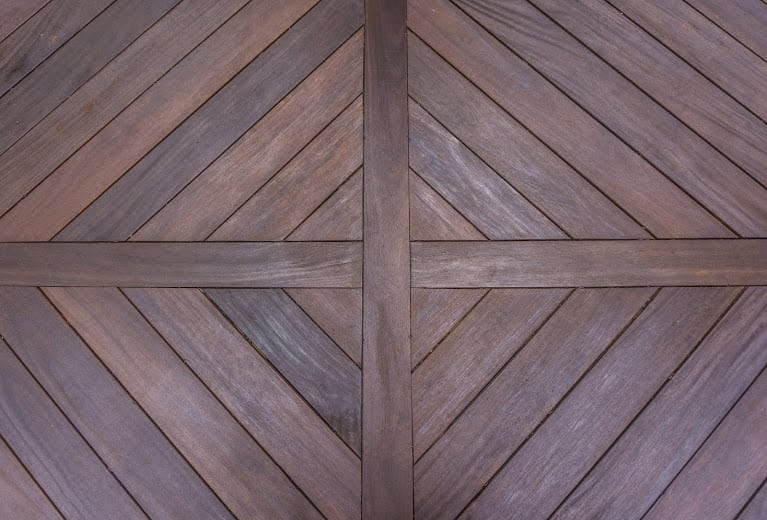
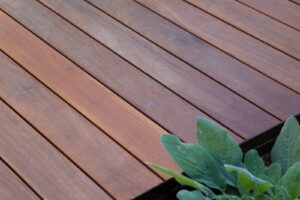
Cumaru generally brings more noticeable color movement. One board might lean golden while the next pulls reddish or deep brown. Ipe tends toward the darker, more subdued appearance that made it famous.
Then there’s price. Cumaru can come with a lower material cost, which gets increasingly meaningful as project size grows.
That makes the decision less about finding a “lesser version” of Ipe and more about deciding which hardwood makes sense for the project you’re actually building.(opens in new tab)
Austin Gave Cumaru Another Reason to Get Our Attention
Here’s where the Cumaru conversation gets particularly relevant right now.
Cumaru has earned Class A fire-rated approval from the Austin Fire Department.
That’s significant as Austin continues to focus on fire-conscious construction and projects within the Wildland-Urban Interface(opens in new tab).
For years, hardwood conversations centered largely around longevity, appearance, and cost. Fire performance is increasingly part of that conversation too.
For someone who specifically wants real wood, Cumaru creates another option worth exploring when Class A fire performance is part of the material conversation.
One important distinction: a Class A-rated material does not automatically make an entire project WUI compliant. Location, assembly, construction details, and current code requirements still need to be considered as part of the complete project.
But in Central Texas, Cumaru now has something meaningful to bring to the table beyond simply being “an alternative to Ipe.”(opens in new tab)
Austin, Atlanta and Nashville Don’t Ask the Same Thing From Cumaru
This is where exterior material advice gets too generic.
Wood doesn’t live in a spec sheet. It lives outside.
Cumaru in Austin can spend summer after summer getting hammered by intense sun and heat. Atlanta brings plenty of heat too, along with substantial humidity and rainfall. Nashville gets humidity plus more noticeable seasonal swings.
Cumaru’s natural durability gives it an advantage across all three markets, but a durable species doesn’t fix a poorly designed project.
For decking, airflow and drainage matter. So do board spacing, acclimation, fastening, and end sealing. Cladding brings its own installation and moisture-management considerations.
The application may change, but the principle doesn’t: you’re installing a natural material that will respond to its environment.
The goal isn’t to stop wood from being wood. It’s to design and build in a way that lets it perform like it should.
Your Cumaru Is Going Gray. Is Something Wrong?
Nope.
And this is probably one of the most useful things to understand before choosing Cumaru or any tropical hardwood.
Gray is a color decision, not automatically a durability problem.
Sunlight gradually changes the surface appearance of Cumaru. Without a pigmented coating, those warm browns and reds will eventually give way to a silver-gray patina.
Some people love it. Others spend three years asking how to get the original color back.
It’s much easier to decide which camp you’re in before the wood starts changing.
If You Want to Keep the Color, Color Matters
At TimberTown, we recommend ProCoating (opens in new tab)for hardwood materials.
Here’s the part that often gets missed: effective UV protection requires pigment.
The color tone isn’t there just to make the coating look different in the can. Pigment helps protect the wood from the UV exposure that changes its appearance. A completely clear coating will not provide the same protection against color change as a properly pigmented finish.
That creates a tradeoff worth understanding.
Want to hold onto those freshly installed Cumaru tones? Choose an appropriate ProCoat color with UV protection and plan to maintain it.
Love the idea of Cumaru developing a natural silver-gray patina? Let it happen.
Neither choice is wrong. They’re simply two very different looks.
There’s One Catch: Cumaru Knows It’s Hardwood
All that density comes with consequences.
Cumaru isn’t pressure-treated pine. You don’t want to show up with the same tools and installation plan and assume the material will cooperate.
Its hardness and interlocked grain make sawing and machining more demanding. The Cumaru technical data recommends carbide cutting tools and calls for predrilling when nailing or screwing the material.
That’s not a knock against Cumaru. It’s a reminder to bring the right tools to the job.
And there’s one part TimberTown can handle before the boards ever reach your jobsite: we offer milling and predrilling for Cumaru.(opens in new tab)
That can take a repetitive, time-consuming step out of installation and give builders material that arrives better prepared for fastening.
The same density that asks more from you during installation is a big part of what makes Cumaru so capable once the project is finished.
Hardwood demands more up front so it can give you more when the project is built.
So, Who Should Actually Consider Cumaru?
Cumaru gets particularly interesting when you want real wood, serious durability, natural variation, and premium hardwood performance, but don’t necessarily need Ipe to be the answer simply because it’s the name you already know.
For decking, it offers a compelling balance of durability, appearance, and potential material savings. For cladding and other exterior applications, it creates an opportunity to take those same warm tones and natural variation vertical.
And in Austin, its Class A fire-rated approval gives Cumaru another layer of relevance as fire-conscious exterior design becomes a bigger part of the conversation.
That’s ultimately why we think Cumaru deserves more attention.
Not because it’s “the cheaper Ipe.”
Because Cumaru is good enough to have its own conversation.
At TimberTown, we help builders, architects, designers, and homeowners throughout Austin, Atlanta, and Nashville evaluate Cumaru and other exterior materials based on the actual project. Bring us the plans, the application, the look you’re chasing, and the realities of the jobsite.
We’ll talk wood from there.
Related Resources
-
All About Hardwood Decking
If you’re familiar with HGTV or Dwell magazine you’ve probably seen the word “Ipe” or “Brazilian Hardwood” pop up a few times. There’s no doubt that tropical hardwoods are becoming more and more popular for decks, decks, sidings, and other modern applications…
-
6 Deck Patterns That Save You Money
6 Deck Patterns That Save You Money Decking designs to…more
-
How To Finish A Hardwood Deck
Finishing (applying a protective coating or stain) a hardwood deck is different than a softwood deck, like cedar or treated pine. For instance, hardwoods like Ipe, Cumaru, Tigerwood, and Garapa are much more dense, making it difficult for finishes to penetrate the wood…
-
How Do I Winterize My Hardwood Deck
During the winter months, it can be easy to neglect deck maintenance. However, the build-up of snow and ice can cause damage if you don’t prepare for winter. We’ve made a helpful list to get your deck ready to brave the cold and look better than ever when spring comes around…
- « Previous
- 1
- 2
- 3
- Next »