
The Best Railing Often Disappears
Modern railing systems are changing how outdoor spaces feel, function, and connect to the view
A great view changes the way a deck feels.
The wrong railing can block it faster than most people realize.
Whether you’re overlooking the lake, backing up to a golf course, working with a rooftop skyline, or trying to keep a Hill Country sunset in sight, the railing choice matters just as much as the decking itself. Some homeowners want the railing to disappear completely. Others want it to become part of the architecture.
The good news is today’s railing systems offer far more flexibility than they used to. From modern cable and glass systems to custom wood details and aluminum profiles, there are plenty of ways to keep the view open without sacrificing style, safety, or performance.
Glass Railing
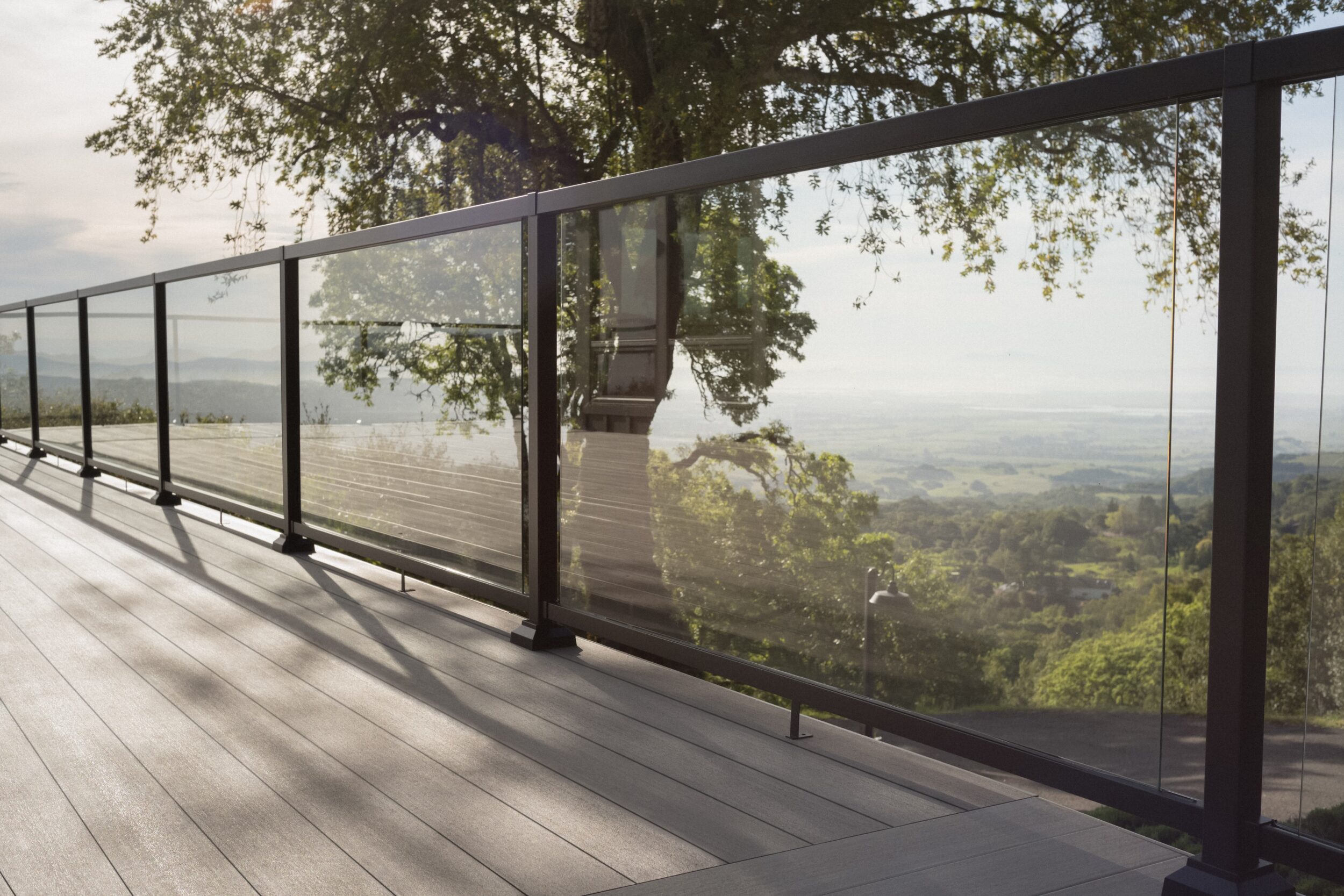
If maximizing the view is the priority, glass railing is usually the first place people look. It creates some of the cleanest sightlines available and works especially well around pools, waterfront properties, elevated decks, and rooftop spaces.
Most modern glass systems are built around aluminum framing for cleaner lines and long-term durability. Framed systems tend to feel more structured and cost-effective, while frameless designs create a more seamless, high-end appearance.
One thing homeowners often overlook is maintenance. Structurally, glass railing holds up extremely well. Visually, though, it does require regular cleaning to keep pollen, fingerprints, and water spots from becoming noticeable, especially near pools or lakes.
Glass railing also tends to work best when the surrounding design is fairly clean and modern. Pairing it with streamlined decking like Advanced PVC or refined hardwoods like Ipe helps keep the entire outdoor space feeling intentional instead of overly busy.
Cable Railing
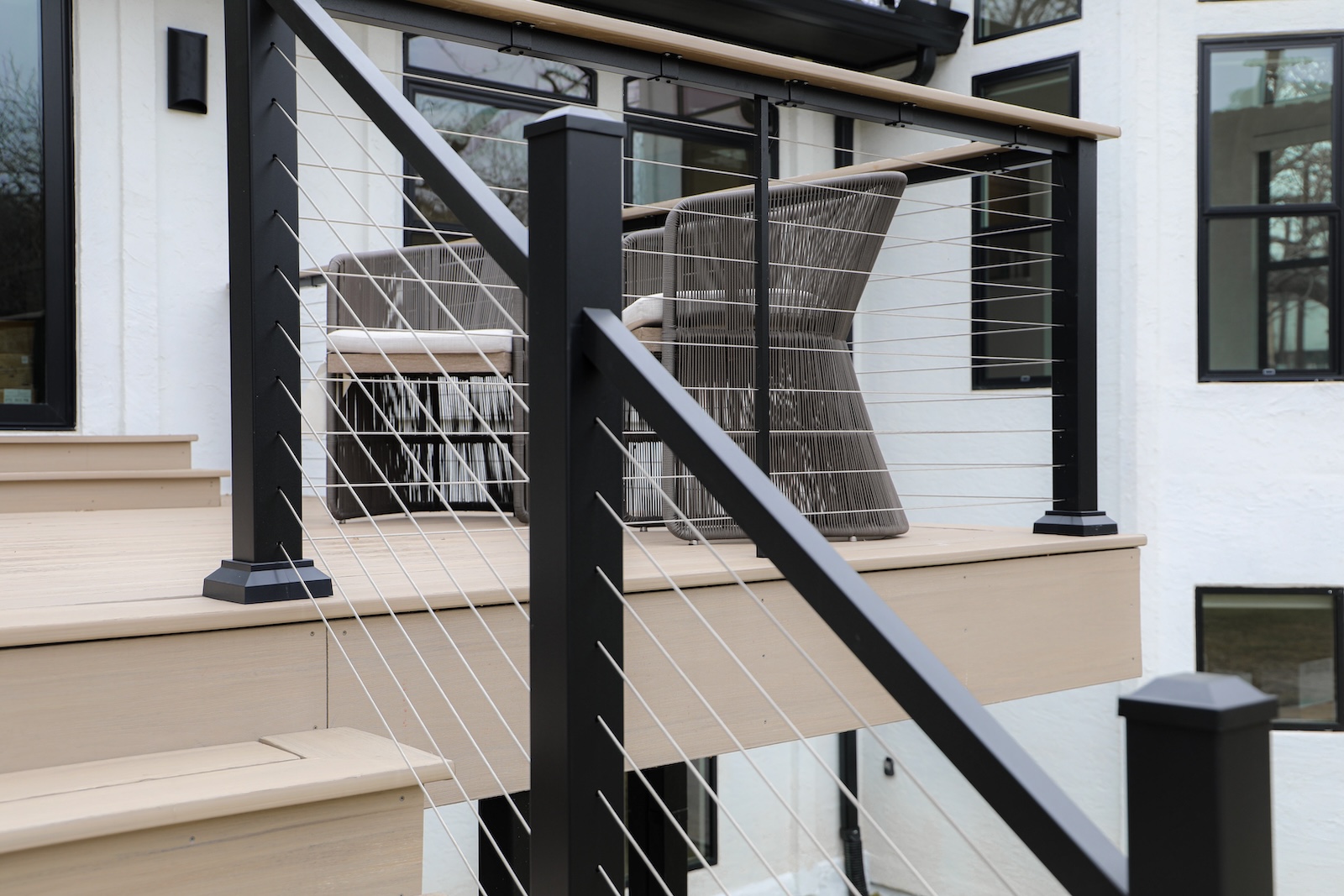
Cable railing has become one of the most requested options for modern outdoor spaces because it keeps views open while adding just enough structure to frame the deck.
Black aluminum posts paired with horizontal cable systems have become especially popular on lake homes, mountain builds, and contemporary backyard projects because darker railing profiles visually disappear into the background instead of competing with the scenery.
Cable systems also pair incredibly well with natural materials. Hardwoods like Garapa or Cumaru soften the industrial feel and help the space feel warmer and more architectural.
One advantage many builders appreciate is flexibility. Cable railing works across wood-framed and metal-framed decks and can often adapt to longer runs or custom layouts more easily than glass systems.
That said, not all cable railing installs the same. Proper tensioning matters, especially over time, and hardware quality makes a huge difference in how clean the final system looks years later. Most of the cost is in the fittings and terminal ends, so longer uninterrupted runs can actually help reduce overall project costs.
Systems like TimberTech's Impression Rail Express® with Cable have become popular because they simplify a lot of the installation process while still keeping a clean modern appearance.
Metal Railing
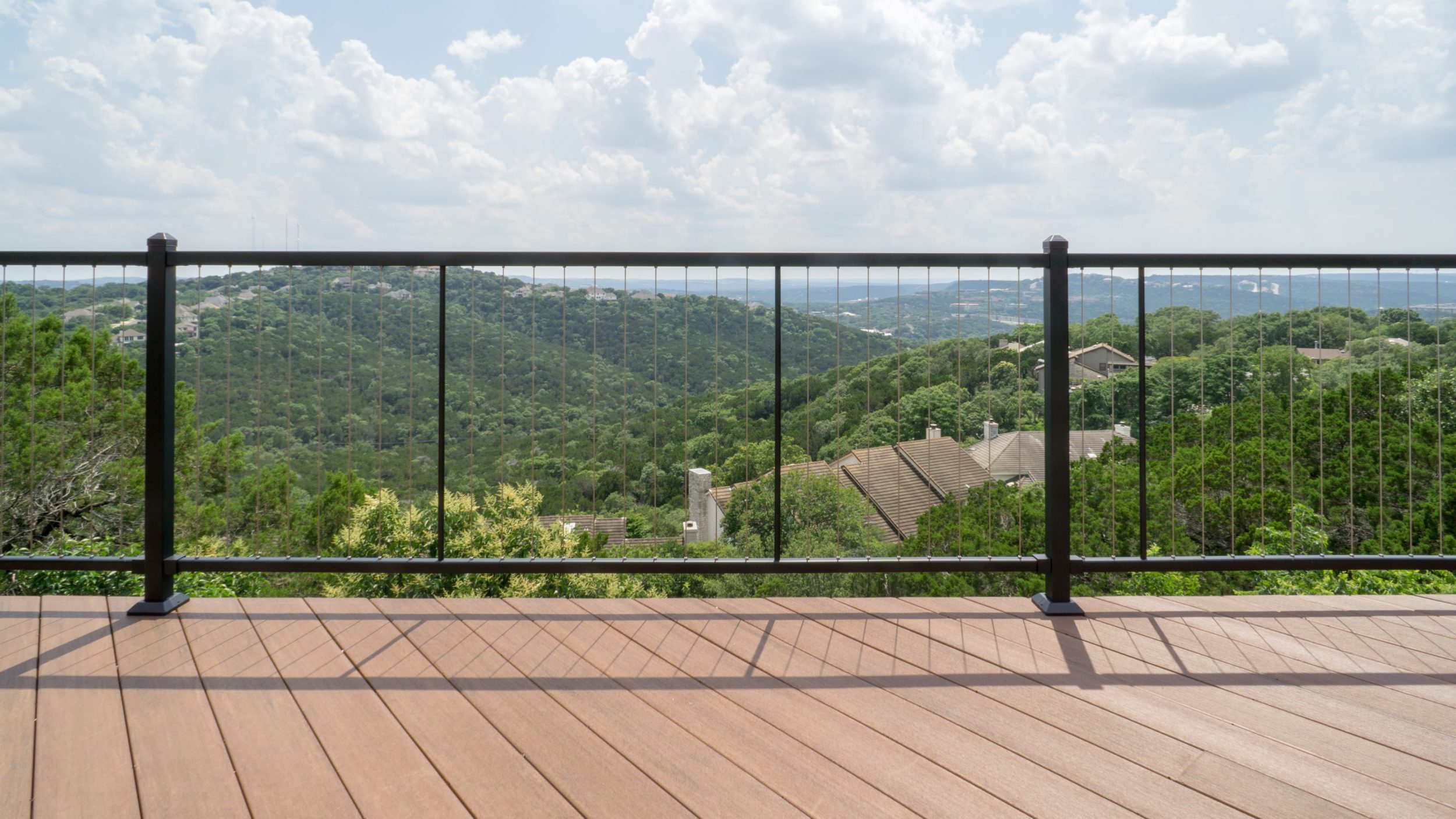
Powder-coated aluminum railing has quietly become one of the most versatile options in outdoor design. It works across traditional homes, modern builds, rooftop decks, multifamily projects, and commercial spaces without feeling out of place.
One reason aluminum railing continues to grow in popularity is because it visually stays out of the way. Slim black profiles tend to blend into the background, which keeps the focus on the decking, landscaping, or surrounding view instead of the railing itself.
Compared to older steel or wrought iron systems, aluminum also requires far less maintenance over time. There’s no constant repainting or worrying about rust issues in high-moisture environments.
This category has also expanded well beyond basic square pickets. Today’s systems include drink rails, integrated lighting options, cable infills, glass combinations, and larger architectural profiles that can help tie into modern window packages and exterior finishes.
For commercial spaces or elevated decks, metal railing is often one of the easiest ways to balance clean aesthetics, durability, and code requirements without overcomplicating the build.
Wood Railing
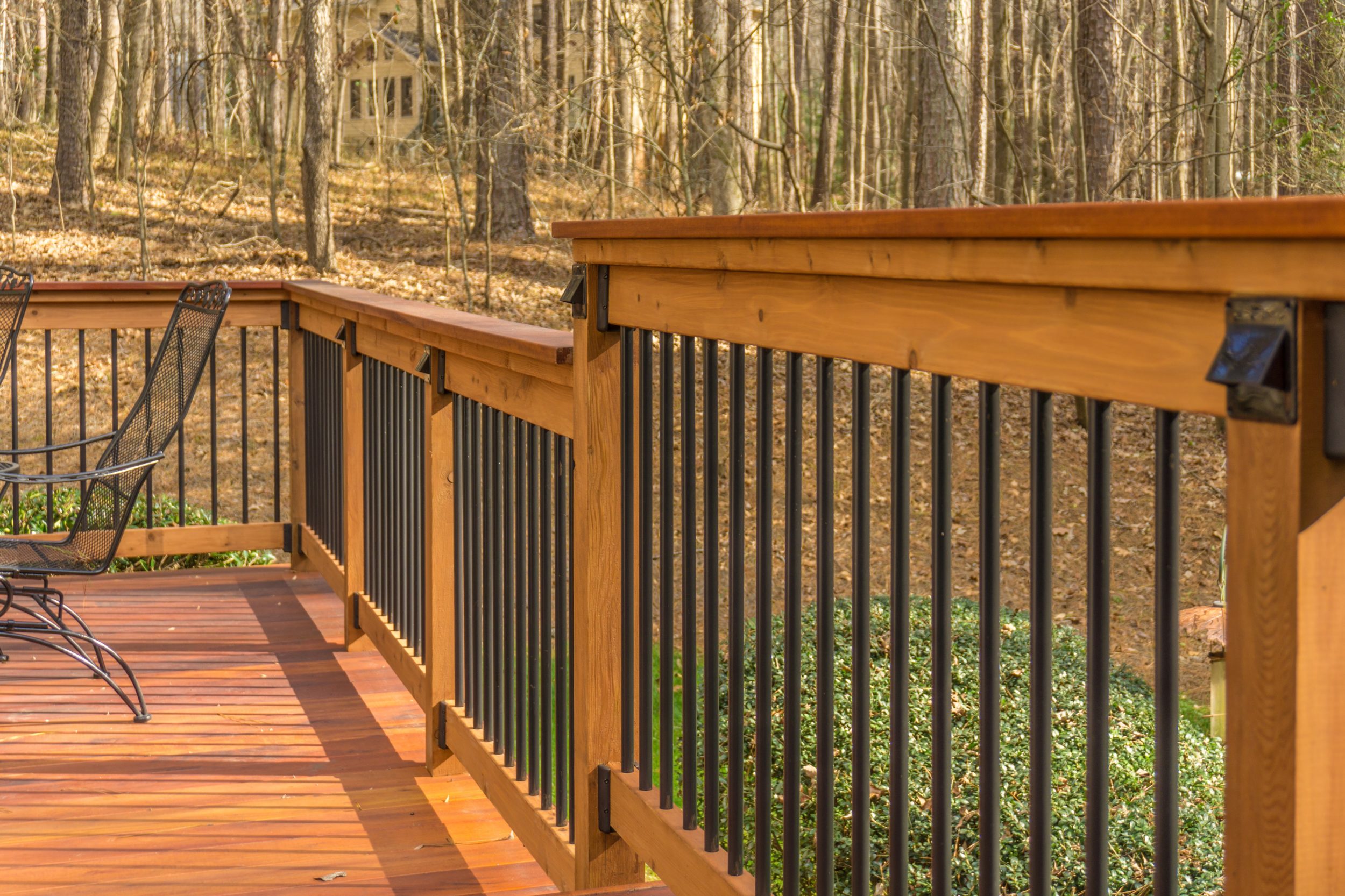
Wood railing brings a completely different feel than glass or metal systems. It feels warmer, more architectural, and often more connected to the home itself instead of looking like an added system attached afterward.
Cedar railing remains a classic choice because of its natural character and flexibility. It works especially well on traditional homes, screened porches, and outdoor spaces where the goal is to feel relaxed and natural instead of ultra-modern.
Hardwoods like Ipe can take things in a more refined direction. Custom hardwood cap rails paired with cable systems have become increasingly popular because they soften the look of metal while still keeping the view open.
Wood also allows for far more customization. Horizontal slat details, mixed-material combinations, custom top caps, privacy screening, and integrated bench or planter details can all help make the railing feel more intentional and project-specific.
This is also where custom milling starts to matter. Small details in profile shape, spacing, and finish quality can completely change how the railing feels once the project is complete.
Finding the Right Balance
Every railing project balances view, maintenance, budget, code requirements, and overall style a little differently.
A pool deck may prioritize visibility for safety. A rooftop project may need to account for wind exposure. A lake house may focus on preserving seated sightlines instead of just standing views. Sometimes the best railing system is the one you barely notice. Other times it becomes part of the architecture itself.
The best results usually come from looking at the railing and decking together instead of treating them as separate decisions.
At TimberTown, we help builders, architects, and homeowners compare railing systems in person so they can understand how different materials, colors, and profiles actually feel within the space before making a final decision.